
→ January 12, 2023

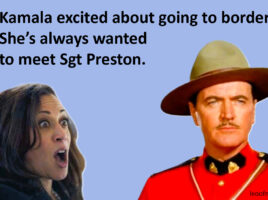
Think of the Memes!
Just think of all the Internet memes this would create!
Ayn Rand’s Character Hank Rearden Brought to Life
Ayn Rand may have been the smartest person of the 20th Century. Next to Leo, of course.

California Bans Plastic Bags, and Zaps Your Freedom
With the passage of Proposition 67, California became the first state to ban single-use plastic grocery bags. It also requires most stores to charge shoppers 10 cents for either reusable plastic bags or paper bags. The idea is to manipulate people into using cloth totes to carry home their groceries. Hooray for the environment? Maybe.
Hey, you! Guy on the boat.
The Navy has taken away sailor’s job titles. Now no one knows what to call each other. https://www.navytimes.com/articles/the-navy-took-away-sailors-job-titles-and-now-no-one-knows-what-to-call-each-other

What’s Your Liberal Name

Election 2016: 35th Anniversary of the Largest Tax Cut in American History
August 13, 2016 will be the thirty-fifth anniversary of the largest tax cut in American history: The Economic Recovery Tax Act of 1981 (ERTA), sometimes referred to as the Kemp-Roth Act. This law is generally credited with beginning the economic boom which carried through the 1990’s.
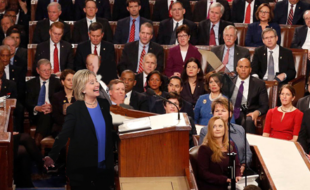
Hillary Clinton Delivers 2018 State of the Union Address
I was scared. I had never encountered a time traveler before. He was scared, too. He held out the document to me. It was torn and burned at the edges, I took it. A flash of light and he disappeared. The contents of the document he gave me follows:

POLITICON: It Takes a Village to Raise a Democracy with Bill Nye, Sarah Palin and Gary Johnson
Many political events, TV channels, and magazines claim to be non-partisan and “fair”, but few achieve it or even mean it. Politicon, billing itself as the unconventional political convention, actually means it and achieves it. Their effort results a stimulating and entertaining event for political junkies. The second iteration of Politicon took place June 25-26 in Pasadena, California.

Too Many Laws: Are You Asking Your Representatives the Wrong Question?
A recent edition of my local newspaper reports that the California Governor Brown had over 800 bills land on his desk, then goes on to detail how many bills and resolutions each of our local representatives managed to get enacted. “How many bills did you pass?” is the wrong question.

Election 2016: Five Campaign Memes Nobody Explains
During election campaigns, candidates will often use phrases or arguments that are vague or undefined, but are designed to stir up emotions. Since, I would like to humbly suggest, we should use reason and not emotion in making these decisions, I’m going to offer some explanations the candidates have probably just been too busy to get to.

Election 2016: Five Debate Tricks You Need to Know
Elections have consequences. No matter where you are on the political spectrum, there are five debate tricks you need to know so, in the words of The Who, “We don’t get fooled again.” Being able to spot someone you oppose using one of these tricks will make you feel good. Spotting someone you like using them may give you second thoughts. There are more than five tricks, of course, but the following are the most common and most damaging to rational discussion.
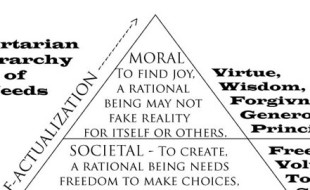
Move Over Maslow: A Libertarian Hierarchy of Needs
I don’t make New Year’s Resolutions, but I do take advantage of this calendar transition to review mission statements, goals, and projects. As part of this annual refocusing I came across an exercise for determining your values and prioritizing them. As I proceeded through the exercise, it occurred to me that I might be doing nothing more than recreating Abraham Maslow’s Hierarchy of Needs. Then I had an insight. His hierarchy doesn’t work for libertarians or other rational creatures.
DIY: How to Insult a Progressive
Don’t leave insulting progressives to Donald Trump. You can do it to. It’s fun and simple. All you need is to be in touch with reality, think rationally and avoid political correctness (i.e., lies). Pat Condell provides a a quick guide to the essentials of how to insult a progressive.

The Singularity: When Joe Biden Became Self-Aware

ISIS Makes World of Mad Max Look Like a Resort
Reading the descriptions of life under ISIS, it almost seems like you are reading the script for a film about a dystopian future. The vile, disgusting, evil behavior of ISIS is hard to believe.
There is a certain element which looks at ISIS and says, “See what religion does to society.” I disagree. Years ago, while in one of his Earthling personas, Leo of Mars published a review of Mad Max by his college roommate. The review, no longer extant, suggested that the world of Mad Max was a portrait of “man without God.”

Doing Trigger Warnings The Right Way
Trigger Warnings keep us safe from frightening words and images. But, you have to do them correctly. Here’s your opportunity to learn from a very, very wise and concerned and sensitive professor of English Literature how to include trigger warnings in your social interactions.
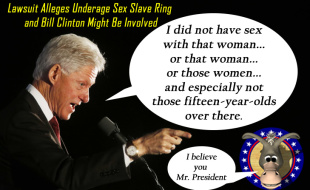
Poor Persecuted Bill
Bill Clinton likes the ladies, but did not have sex with that woman, or that woman, or those women over there and especially not those fifteen-year-olds over there. You believe him, don’t you?

Earthling DIY: Dealing with the Brainwashed
Here is a link to an article by Jim Good, of Taki’s Magazine, which provides practical methods, based on years of experience, in effectively communicating with the reason impaired. <-- SARCASM WARNING.